Why Are Electricity Rates So High? Blame AI Data Centers, Greed and Sam Insull

Thanks so much for opening and reading this email. Subscriptions are free, but if you value my writing, please consider becoming a paid subscriber. Six dollars a month will help me to continue my work. As a bonus, subscribers receive free access to my new book “The Natural Neighborhood,” which is serialized in this newsletter: A new chapter every month.
Mammoth bulldozers are busy clawing the earth in a fallow farm field like hungry bears a mile away from our home. They are prepping the site for a data center.
This nascent 400-acre complex of computer servers, which may include some 20 buildings, is situated near the power, water and natural gas grid; its future ambitions promoted 20 miles south on an interstate highway billboard.
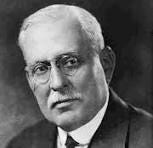
I know Samuel Insull, one of the godfathers of the modern electrical grid, would be beaming. The protégé of Thomas Edison and founder of Commonwealth Edison, Insull not only championed ever-larger electric central-station power plants, he deftly marketed electricity to the masses. His business failure in 1932 was the largest in U.S. history until the Enron debacle in 2001. (I profiled his rise and collapse in my book “The Merchant of Power.”) Although nearly all of Insull’s interlinked utility holding companies failed, “ComEd” survived, later to become part of Exelon, the largest U.S. utility parent company.
Insull was the Elon Musk of the pre-Depression era, eventually becoming a universal symbol of robber baron excess. Franklin Delano Roosevelt cited Insull in a 1932 campaign speech as one of the malefactors causing the Great Depression. When preparing for his role in his iconic movie Citizen Kane, Orson Welles even told his make-up artist he wanted to “look like Insull.”
Insull promoted the idea that “public” utilities, that is, companies owned by private stockholders, should hold “natural monopolies” in local and regional power production. They could do so by massively scaling up and controlling power plant capacity. After General Electric was created in 1892 and Thomas Edison was pushed out of his company by J.P. Morgan, Insull came to Chicago. In the early 20th century, Insull then consolidated several small electricity utilities that became Commonwealth Edison, which became a power monopoly in Chicago and Northeastern Illinois.
Then Insull seeded state public utility commissions that could set rates for the cost of power, entities that he largely controlled. He created a system where power users would benefit from lower rates at night when the “load,” or demand, was lower. Stockholders and ratepayers were essentially funding his capital-intensive generation and power line expansions. Since this system generated consistent cash streams, his companies paid generous stock dividends to investors.
Insull’s agenda, of course, was to garner as many power customers as possible from electric urban transit systems — he once owned the Chicago “el” trains — to housewives using new appliances like electric irons and vacuums, which he initially sold from stores he owned. His marketing campaigns were tremendously successful as energy consumers from factory owners to homeowners became convinced that they couldn’t live without access to Insull’s electricity. The more power consumed, the richer Insull and his investors became.
Today’s robber barons want to use AI as an all-encompassing platform to purloin data and sell advertising, goods and services. It’s already obscenely profitable since only a handful of companies control online platforms. They want to reap dividends from public resources (like freshwater supplies) without paying into communities.
Now that the century-old Insull-created grid is being strangled by the power-voracious needs of AI, it begs the question of whether the power grid can handle the demand. Escalating power use is good for utility company profits and “magnificent 7” companies like Alphabet (Google), Amazon and Meta, but how much higher will electricity rates climb and who will be burdened the most by this infinite power appetite?
The early numbers look discouraging for ratepayers.
Electricity rates have skyrocketed near data centers, according to a study by Bloomberg Technology. “Wholesale electricity costs as much as 267% more than five years ago in areas near data centers,” the study found. “That’s being passed onto customers.”
In my home state of Illinois alone, “based on current trends, data centers will account for up to 72% of electricity demand growth in Illinois by 2030,” according to a recent study by the Union of Concerned Scientists. “From 2026 to 2050, data center load growth will increase electricity system costs in Illinois by $24 billion to $37 billion, or 15% to 24%.”
Since the AI-data center boom is moving near the speed of light, local and state governments are slowly playing catch up. How do local authorities regulate a system that’s a complex, public-private partnership with outdated rules that are often more complicated than proof-based calculus? Blindsided communities are like slugs trying to keep pace with greyhounds.
While millions are already users of AI, are they willing to pay extra for the benefits of technology and its environmental and economic impact? It’s fast becoming an emotional hyperlocal political issue that’s animated voters from Virginia to California. What will be the environmental impact of these data centers and what will they cost in the long-run to communities that have little or no say in the surcharges added to their utility bills? Will the data centers even be powered by clean energy or worse yet, fossil fuel plants, which contribute mightily to global warming?
Of course, if AI was exclusively being harnessed to find cures for Alzheimer’s Disease, cancer or Parkinson’s Disease, few would have any objection. But if, as many fear, AI is also likely the merciless terminator of livelihoods while stealing and monetizing our personal data, we must have a say in its development and regulation. We need to have national and hyperlocal discussion on whether this is a societal priority now.
Then there’s the percolating anger against “big data” not only exploiting communities, but destroying meaningful labor. The simmering resentment of billionaires saddling working families with their capital and operating expenses is fueling a growing animus that has been looming in our national historical memory since the 1930s.
When I interviewed Studs Terkel, the Pulitzer-Prize winning “poet of the tape recorder” for my book years ago, he called Insull a “bastard” because his mother had lost money buying stock in an Insull company that failed during the Great Depression. The hatred was still fresh in his memory (he was in his 90s at the time).
Ultimately, though, electricity rates alone are about more than profits and inflation. Their unbridled escalation is triggering a new, socio-emotional movement that loudly challenges corporate political power itself, which ebbs and flows — often faster and more intensely than electrons.
Vincit Omnia Veritas
(Truth Conquers All)
John F. Wasik is the author of “The Merchant of Power: Sam Insull, Thomas Edison and the Creation of the Modern Metropolis” and 18 other books. This newsletter was not produced by AI. Please upgrade to a paid subscription. Let me know what you think! To contact me about speaking and writing or offer even more dangerous ideas, email me: johnwasik@gmail.com.