Why Divesting Fossil Fuel Stocks Falls Short; Here’s a Better Strategy Based on Petroika and Ignoring Venezuela

“Be the change you wish to see in the world.” – Mahatma Gandhi
Thanks so much for reading and opening this email. My newsletter is a reader-supported publication. Subscriptions are free, but if you enjoy my writing, please consider becoming a paid subscriber. Six dollars a month will help me to continue my work.
“Divest! Divest!” I must get his message emailed to me every week. It comes from well-meaning environmental and faith-based groups. They target institutional investors such as pension funds and socially responsible investors like me. Yet I don’t think divesting portfolios of fossil fuel stocks is the best approach to addressing climate change. There are more effective ways of addressing this existential threat.
When I was a full-time business journalist writing columns for Bloomberg and Reuters years ago, I wrote a column on non-divestment that attracted the attention of Bill McKibben, the grand master of climate action. I think he appreciated my point, although much of his activism leads toward divestment.
What gives? Am I an apostate to the climate action movement? Although I’m a confirmed climate activist and public official, I have this ongoing friendly feud with the green investing community. I don’t think disinvesting from fossil fuel stocks will make a dent in climate change. We can get better results through a social capitalism model and what I call petroika, a restructuring of the petroleum industry, which I discussed last week.
The most fundamental reason why divestment won’t work is the nature of capitalism itself. For every seller, there’s usually a buyer. Let’s say you owned shares of Exxon Mobil. When you sell the stock, somebody else is buying it. They may even buy the shares at a discount, which will make the company more appealing because it increases the likelihood the investor will make money by buying low, holding or selling high. It may even encourage the oil/gas company to buy back its own shares, which countless companies do, often resulting in a surge in stock prices.
Selling your shares, however, will not change the company’s corporate behavior or investment strategy. They’ve been making money the same way for about a century. You’re not going to alter their business plan. Even telling banks that own fossil-fuel stocks to sell is a dead end. As you might imagine, banks are focused on steady dividends and profits. Unless petro companies cut their quarterly payments and earnings tank, bank portfolio managers won’t feel the sting. You’re a gnat to them.
“Unfortunately, what looks good on paper often falls short in practice,” writes Tom Johansmeyer in the Harvard Business Review. “There’s one major problem with divestment: Selling an asset requires someone to buy it. In other words, for you to divest, someone else needs to invest. As a result, divestment could end up breathing new life into fossil fuel assets – exactly the opposite of what’s intended.”
What You Can Do
You want to make a difference? Don’t parade in front of a bank branch with a placard decrying their fossil-fuel investments unless you’re seriously depressed and it makes you feel better. Take personal action and get like-minded people involved.
Change Corporate Environmental Policies. To be clear, this is like pretending that an aircraft carrier can pivot in the water like a speedboat. It’s a long and ponderous process. If you own shares, however, you have rights as a shareholder. You can demand that the company adopt a long-range climate plan to reduce its carbon footprint. You can work through other groups that own multiple shares to make this request through proxies before the annual spring shareholder meeting (contact your shareholder relations representative to see how to do this). I’ll be honest, though. Most small-shareholder proxy proposals fail because the largest shareholders rarely approve them. Although your chances of success are slightly (but not much) higher with large institutional shareholders like pension and mutual funds, you can organize groups to pressure the biggest investors. At the very least, a public company must disclose “material risks” in its 10-K annual statement that it’s required to file by federal law. Nevertheless, starting by reading proxies and 10Ks is a good way to educate yourself and like-minded investors. Climate change is a huge material risk for everyone, because we all lose more than money.
Change the Corporate Tax Code. Like the first option, these days this is like hauling a boulder uphill with twine. Yet this would have profound impact and force fossil fuel companies to restructure. Petroika! Oil/gas companies are rewarded for the “drill, baby, drill” drivel that passes for national U.S. energy policy. Take away some $40 billion in annual tax breaks. Switch their suite of tax incentives to renewable energy production. They already know more than any industry about deep wells on land and platforms in the ocean. Wind and geothermal could be a much easier transition than you think. Do they know how to build mammoth rigs on the continental shelf? Do they have the technology to drill into deep rock? You betcha! Just stop rewarding them for burning methane and blasting underground shale for oil (or digging for coal).
Change Public Policy. Of all the strategies I’ve noted, this is the most accessible because it’s local and regional. Put pressure on elected officials (city/village, county & state) to adopt climate action plans with set goals. In Lake County, we created a strategic master plan to cut our carbon emissions by 90% by 2040. We did this in 2019 when many like-minded colleagues were elected by our neighbors. This master plan is soup to nuts, including everything from solar panels on public buildings to electrifying our county fleet. We even hired a sustainability manager (Robin Grooms is amazing) to manage and shepherd our climate plan. We now have three net-zero buildings in the county (no net carbon emissions) and plan more. Tell your local village to adopt a net-zero energy and waste policy. Show up at village and school board meetings, which are typically poorly attended. Most of our local schools have extensive solar arrays. That’s because citizens started showing up and demanded green policies.
Make Green Personal Investments. Okay smarty pants, if you’re sour on corporate divestment, what are you doing? Let me count the ways. We are in the process of electrifying our home. Although our furnace is still natural gas, it’s more than 92% efficient. When we have to replace it in 15 years or so, we’ll go with a heat pump, which provides ultra-efficient hot and cold air. We have a 90%-efficient tankless (natural gas) water heater, which will be replaced by a heat pump as well. When our gas dryer died, we went electric. The same with our gas stove, which we replaced with an induction-electric range and convection oven. We rarely eat red meat. Taking advantage of the last of the $7,500 federal electric vehicle (EV) incentives, late last year we replaced our primary car -- a Toyota Prius V hybrid (150,000 miles) -- with a Chevy Equinox EV (about 320 miles full-charge range). We even hard-wired a high-voltage fast charger in our garage. Sometime in the future, we will consider a battery array, which will store electrons from our rooftop solar panels (2021), which offsets our electrical use in the summer during peak usage times. What made many of these green improvements possible are federal and state tax breaks. The State of Illinois, much to my surprise, even paid us $4,000 for our EV purchase in a special incentive program offered through the Illinois EPA. And we plan to do much more from composting our kitchen waste to growing more of our own food. I’m also working with several local groups to organize more green local agriculture, transportation, housing and energy, especially in buildings. So rather than selling my stock index mutual funds, I’m employing an “all of the above” strategy in my community and state. Our overall goal is to reduce our overall carbon footprint through greener home energy consumption/production, transportation, waste management/recycling and transportation. Our plan is centered on integral ecology, that is, incorporating multiple actions that are focused on a single goal. Better yet, the social ecology of green living can go viral in your community. When you get solar panels or an EV, your neighbors will want to keep up with you.
Still, the most direct investment you can make in green practices always starts at home. Identify local non-profits that are doing the work on the ground. They range from the Sierra Club to non-profits that fund environmental progress such as native restoration and education. Work to reduce your personal carbon footprint from taking local transportation to less lawn mowing and more native planting.
At the very least, get politically active. Demand that your state & federal representatives, HOA board, village/city, school/park/library districts and local businesses create a climate-action plan that moves your community to net-zero carbon emissions by a date certain. Start with solar panels on public buildings and a waste reduction/recycling plan. You don’t even have to do this by yourself. Dozens of groups are already politically engaged. If you know anyone who can be persuaded to shift their political worldview, the real need now is to divest from MAGA and the current administration.
Most importantly, ditch despair and take climate action personally. It’s a moral and spiritual challenge. You’re doing this for future generations. Don’t you want to leave this world a better place when you leave it? Be the change you want others to embrace. Share your passion.
Definitely do a group hug, but organize around the change you want to see in public and corporate policy. Pick one issue and run with it. Have fun. While corporations aren’t people by themselves, they are run by people who share the same planet.
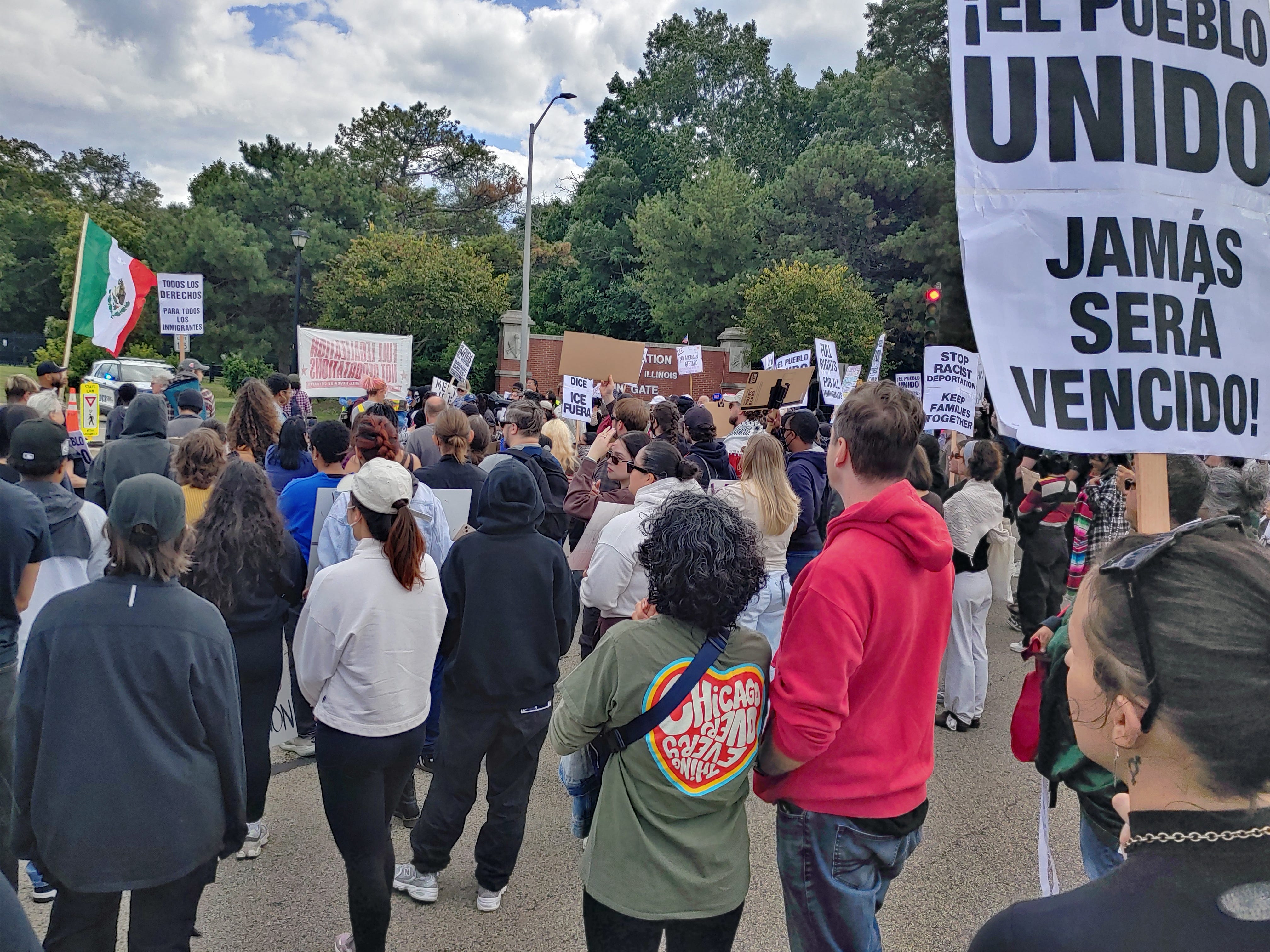
Mahatma Gandhi and Dr. Martin Luther King, Jr. preached “satyagraha” or a nonviolent resistance to evil based on truth. Millions are already doing this now in protest of ICE/Border Patrol fascism and murder. We can apply our compassionate energy to saving our environment in much the same way.
Vincit Omnia Veritas
(Truth Conquers All)
If you enjoy what you’re reading, please support my work by upgrading to a paid subscription. As a bonus, subscribers receive free access to my new book “The Natural Neighborhood,” which is serialized in this newsletter: A new chapter every month. Let me know what you think! To contact me about speaking and writing or offer even more dangerous ideas, email me: johnwasik@gmail.com.
This essay was not produced by AI. I am a sentient writer, journalist, author, environmentalist, speaker, musician and elected county forest preserve commissioner who’s written 19 books and contributed to The New York Times, Next Avenue, Bloomberg and Reuters.